
John 9.2-3 And his disciples asked him, “Rabbi, who sinned, this man or his parents, that he was born blind?” Jesus answered, “It was not that this man sinned, or his parents, but that the works of God might be displayed in him.”
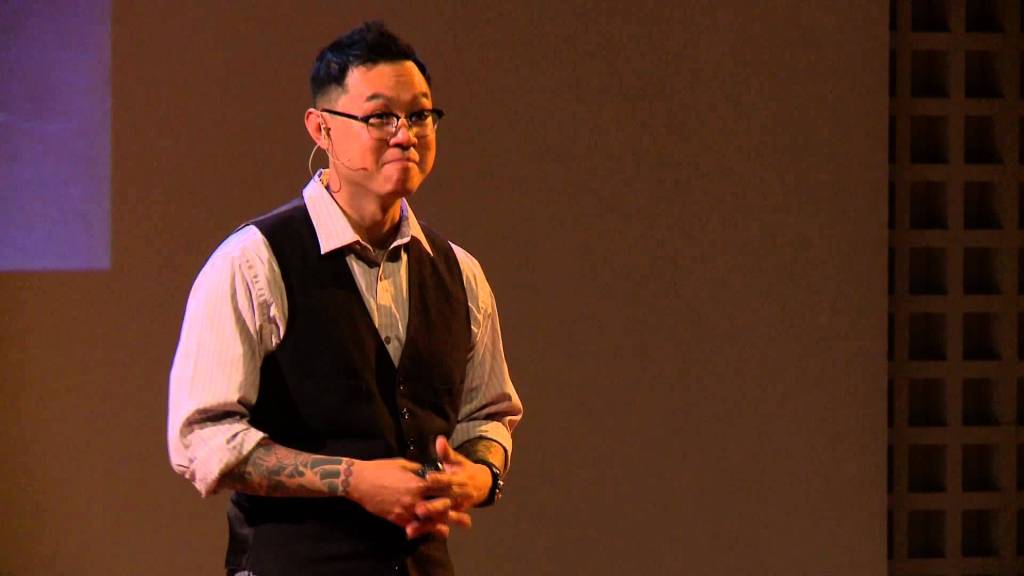
I heard a TED talk given by a Vietnamese man named Phuc (pronounced Fook) who told the story of his family’s escape from Saigon in 1975. It was an incredible story, layered in luck and good fortune. What’s fascinating is how Phuc, now in his 30’s and raised in America, tries to recount the dramatic trail of events with his father. He often wonders about what could’ve gone wrong during their escape from Vietnam? What if they had boarded the wrong bus? What if they had gotten caught?
What’s interesting is that the Vietnamese language has no grammatical form of the Subjunctive (the element of the English language that allows us to wonder and ask “what could’ve happened”) So as Phuc ponders alternative outcomes of his childhood (afforded to him by the English subjunctive), his father, often frustrated and puzzled, simply responds in the indicative “…but that didn’t happen. This is what happened. This is your reality.”
I get the sense that the disciples were doing the same thing in John 9. They were trying to figure out what this blind man could’ve done differently… Could he have escaped this “curse”? Could he have been better off? Could he have avoided it if his parents lived a better life? And like Phuc’s dad, I picture Jesus looking at them all puzzled, saying, “Do you not get it? Why are you concerned about what could’ve or should’ve happened? That’s not the point. The man is blind. And the reality is that it was not that this man sinned, or his parents. He is blind simply that the works of God might be displayed in him.”
And that’s the gospel. While we were blind, “Christ died for us.” (Romans 5:8) God’s glorious work hinges on the reality of our disability, because it’s in our disability, that the fullness of God’s great ability is made known. We are great sinners. Christ is a great savior.
I think of how often I consider my past. If I had just been more patient, if I hadn’t been so foolish, if I had just…. SUBJUNCTIVE, SUBJUNCTIVE, SUBJUNCTIVE…as if there were some way to retroactively change my situation and become a better me. And so I often sit in retrospective paralysis when the great reality of the gospel, the great INDICATIVE, screams at me, “…it is finished!!”
 humdrum